


 English
 中文简体
中文简体 عربى
عربى
Content
A dark PVC panel on a rooftop in Dubai can reach 85°C on a summer afternoon — even when the air temperature is only 42°C. If your panel is made from standard PVC, it's already past its limit. So what type of PVC is heat resistant enough for real-world outdoor use? The answer depends on what the PVC is being used for — and whether its formulation has been engineered to handle the heat.
Why Standard PVC Struggles with Heat
Standard PVC (polyvinyl chloride) performs reliably between 0°C and 60°C. Cross that threshold and it begins to soften, lose dimensional stability, and warp under load. For indoor applications — bathroom walls, ceilings, kitchen panels — this is rarely a problem. Air conditioning keeps surface temperatures well within range.
Outdoor use is a different story. On a 35°C day, a south-facing wall panel exposed to direct sunlight accumulates radiant heat and can easily hit 65–75°C. For standard PVC, that means panel deformation, fading pigments, weakened seams, and a lifespan that falls short of what was expected. This isn't a product defect — it's the material working exactly as its chemistry dictates.
CPVC: The Heat-Resistant PVC for Pipe Applications
If the question is about plumbing, the answer is CPVC (Chlorinated Polyvinyl Chloride). The chlorination process increases the chlorine content of standard PVC resin from approximately 56% to 63–69%, which raises the Vicat softening temperature significantly. CPVC pipes are rated for continuous service up to 93°C (200°F), making them the go-to choice for hot water supply lines, fire suppression systems, and industrial chemical transport where standard PVC would fail.
CPVC maintains its structural integrity under pressure at elevated temperatures — a critical requirement in residential hot water systems that typically operate between 60°C and 71°C. It's not a premium upgrade for every application; it costs more than standard PVC and is unnecessary where temperatures stay moderate. But for any pipe carrying heated fluids, CPVC is the correct heat-resistant PVC formulation.
ASA-PVC Co-Extrusion: The Heat-Resistant Answer for Exterior Panels
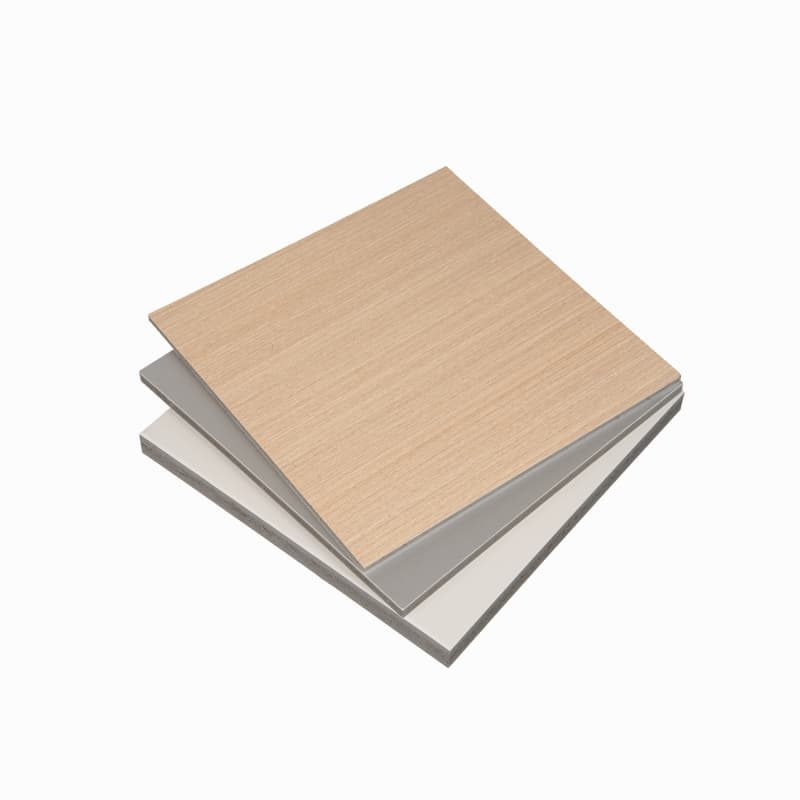
For building cladding, wall panels, decking, and decorative facades, the heat-resistant formulation that matters is ASA-PVC co-extrusion. ASA (Acrylonitrile Styrene Acrylate) is an engineering-grade polymer fused onto a rigid PVC core during the extrusion process. The two layers bond at a molecular level — not a surface coating that can peel.
The ASA outer layer does the critical work in hot climates. It absorbs and dissipates UV radiation before it reaches the PVC core, blocks the solar energy that causes heat buildup, and maintains dimensional stability across a wide thermal range. ASA-PVC co-extruded exterior siding panels are rated for continuous use from -20°C to 80°C — covering desert summers, tropical coastlines, and cold winters within a single material spec.
| Property | Standard PVC | ASA-PVC Co-Extruded |
|---|---|---|
| Max. operating temperature | ~60°C | Up to 80°C |
| UV resistance | Limited (fades in 3–5 years) | High (color stable 10+ years) |
| Outdoor lifespan | 5–8 years | 15–20 years |
| Warping risk under direct sun | Moderate to high | Low |
| Maintenance requirement | Moderate | Minimal |
The PVC core underneath still contributes structural rigidity, moisture resistance, and lightweight handling. Co-extruded ASA-PVC decking boards for outdoor flooring carry the same thermal rating, making them suited to pool surrounds and exposed terraces where surface temperatures spike under sun exposure.
How to Choose the Right Heat-Resistant PVC for Your Project
The right type of heat-resistant PVC depends on the application, not just the temperature rating. Here's a practical framework:
- Hot water piping or industrial fluid transport: Specify CPVC. Verify the pipe's Vicat softening temperature — it should exceed 100°C for safety margin in pressure applications.
- Exterior wall cladding, siding, or facade panels: Specify ASA-PVC co-extrusion with a confirmed temperature rating of at least 75°C. Ask whether the ASA layer is co-extruded or simply surface-coated — co-extrusion is the durable option. Browse outdoor ASA-PVC co-extruded panel options to compare profiles and dimensions for your specific facade requirement.
- Indoor wall panels in climate-controlled spaces: Standard PVC or WPC panels perform adequately. Heat resistance is not the primary specification to optimize here — look instead at moisture performance, surface finish, and fire rating.
Three practical tips when installing heat-resistant PVC panels outdoors:
- Leave expansion gaps. Even ASA-PVC panels expand with temperature changes. Follow the manufacturer's gap specification — typically 3–5mm per 3m panel length — to prevent buckling during peak summer heat.
- Choose lighter colors for high-heat exposures. A light-colored panel surface can be 15–30°C cooler than a dark equivalent under the same sun, keeping the panel well within its rated operating range.
- Verify test documentation. For commercial and export projects, ask for SGS or Intertek test reports confirming UV stability and thermal performance. A product labeled "UV resistant" without third-party testing is a marketing claim, not a specification.
The Short Answer
For pipes: CPVC is the heat-resistant PVC, rated to 93°C for continuous service. For exterior panels and building cladding: ASA-PVC co-extrusion is the heat-resistant formulation, stable up to 80°C with a 15–20 year outdoor lifespan. Standard PVC, despite its many strengths, is neither — it's a 60°C material in a world where rooftops regularly push past that before noon.
Knowing the difference before purchasing is what separates a 20-year facade from a 5-year maintenance problem.


