


 English
 中文简体
中文简体 عربى
عربى
Content
- WPC door frames offer superior durability and moisture resistance compared to traditional wood or MDF frames, making them a cost-effective long-term investment for any building.
- What Exactly is a WPC Door Frame? (Composition & Manufacturing)
- Key Performance Metrics and Data
- Practical Advantages of Choosing WPC
- Installation: What You Need to Know
- Cost Analysis: Initial Investment vs. Long-Term Value
WPC door frames offer superior durability and moisture resistance compared to traditional wood or MDF frames, making them a cost-effective long-term investment for any building.
When constructing or renovating a home, the door frame is often an afterthought, yet it is critical to the door's function and the room's finish. Wooden frames, while traditional, are prone to warping, swelling, and termite attacks. Medium-density fibreboard (MDF) offers a smoother finish but fails catastrophically when exposed to moisture. Wood Plastic Composite (WPC) door frames solve these problems by combining the best properties of wood and plastic, resulting in a product that is dimensionally stable, waterproof, and resistant to biological decay. This article provides a deep, practical look into WPC door frames, covering their composition, performance metrics, installation nuances, and cost benefits.
What Exactly is a WPC Door Frame? (Composition & Manufacturing)
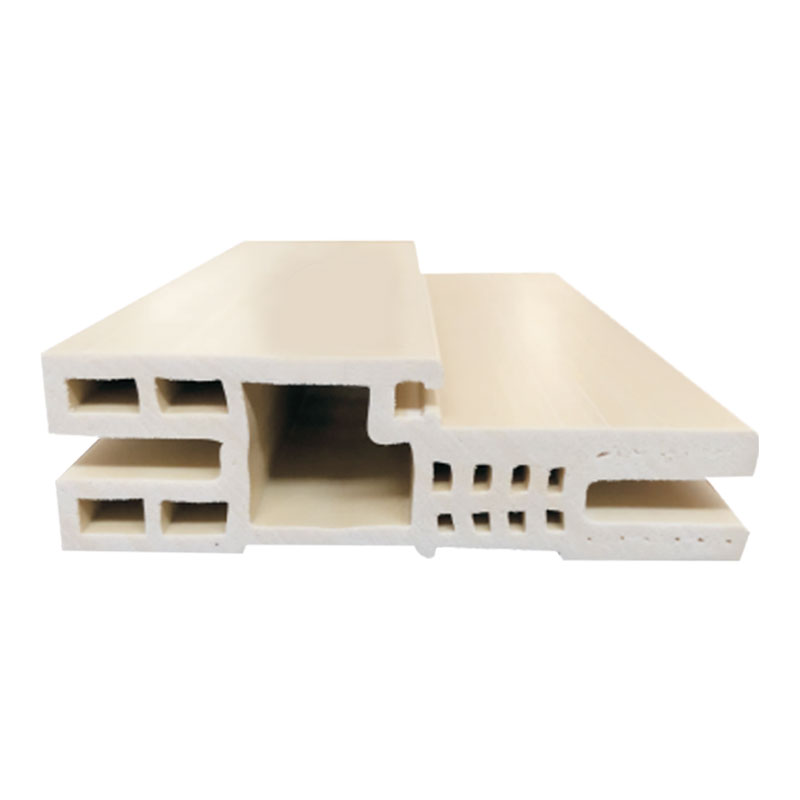
Understanding what WPC is made of helps clarify its performance advantages. WPC is not simply "plastic wood"; it is a carefully engineered composite material.
Core Ingredients: Wood Powder and Thermoplastics
The primary components are finely ground wood powder (often from reclaimed wood or industrial byproducts) and thermoplastic resins like Polyethylene (PE), Polypropylene (PP), or Polyvinyl Chloride (PVC). These are mixed with chemical additives, binders, and UV stabilizers. The ratio is typically around 50-70% wood fiber to 30-50% plastic. This specific blend gives the frame its rigidity from the wood and its waterproofing from the plastic.
The Extrusion Process
Unlike wooden frames which are cut from timber, WPC frames are manufactured through a high-temperature extrusion process. The mixed material is melted and forced through a die to create a continuous profile. This allows for perfectly uniform density and consistent dimensions, eliminating the natural defects like knots or cracks found in wood. After extrusion, the profiles are cut to standard lengths, cooled, and are ready for finishing or assembly.
Key Performance Metrics and Data
To appreciate the value of WPC, it is useful to compare its physical properties against traditional materials. The following table summarizes critical performance indicators.
| Property | Natural Wood (Teak/Sal) | MDF | WPC |
|---|---|---|---|
| Water Absorption (%) | >15% (Prone to swelling) | >20% (Swells and disintegrates) | <0.2% (Waterproof) |
| Termite Resistance | Poor (Requires treatment) | Poor | Excellent (Inorganic material) |
| Dimensional Stability | Varies with climate | Poor in humidity | Excellent (No expansion/contraction) |
| Lifespan (Years) | 15-25 (with maintenance) | 5-10 (in dry conditions) | 25+ (Maintenance-free) |
As the data shows, WPC frames reduce water absorption by over 98% compared to wood and MDF, virtually eliminating the risk of swelling or rot. This single factor is why they are the preferred choice for bathrooms, kitchens, and coastal homes.
Practical Advantages of Choosing WPC
Beyond the raw data, the benefits of WPC manifest in practical, everyday ways that save homeowners time and money.
Zero Maintenance: No Painting, No Polishing
Wooden frames require periodic painting or varnishing to protect them from the elements. This is a recurring cost and effort. WPC frames are through-colored, meaning the color is consistent throughout the material. They do not need painting. A simple wipe with a damp cloth is sufficient to keep them looking new for decades. This eliminates maintenance costs entirely over the life of the frame.
Eco-Friendly and Sustainable
Because WPC uses wood waste and recyclable plastics, it reduces the demand for virgin timber. A single WPC frame can contain the equivalent of several kilograms of recycled plastic that might otherwise end up in a landfill. Furthermore, the frames themselves are 100% recyclable at the end of their life cycle, contributing to a circular economy.
Superior Fastener Holding Strength
A common concern with composite materials is whether they can hold screws for hinges and latch plates securely. WPC has a screw withdrawal force that is often superior to particle board and comparable to natural softwoods. The plastic component fuses around the screw threads, providing a firm grip that resists loosening over time from the constant movement of a door.
Installation: What You Need to Know
Installing a WPC frame is slightly different from installing a wooden one. Knowing these differences ensures a perfect fit and long life.
Cutting and Machining
WPC is denser and heavier than wood. While you can cut it with standard woodworking tools—a circular saw or miter saw with a carbide-tipped blade is ideal—it generates a fine, powdery dust. Always wear a dust mask. Unlike wood, there is no grain to follow, so cuts are always clean and splinter-free. Drilling pilot holes for screws is recommended to prevent the material from bulging, especially near the edges.
Fixing to the Wall
The method of fixing depends on the wall type.
- Concrete walls: Use a power drill to create holes in the frame and the wall, then use plastic plugs and long screws to fasten it. The frame's hollow sections (if any) are designed to accommodate this.
- Brick/Block walls: Similar to concrete, but you may need to ensure screws anchor into the masonry, not just the plaster.
- Drywall/Partitions: Use specialized frame fixings that anchor into the metal or wooden studs behind the drywall.
After fixing, the gap between the frame and the wall is filled with expanding polyurethane foam. This provides insulation and locks the frame rigidly in place. Unlike wood, WPC will not absorb moisture from the wet foam, ensuring the frame remains perfectly straight as the foam cures.
Cost Analysis: Initial Investment vs. Long-Term Value
The initial cost of a WPC door frame is generally higher than a standard timber frame but lower than a high-quality hardwood frame like teak. However, a comprehensive cost analysis must include lifetime maintenance.
A standard 10-foot by 4-inch wooden frame might cost $X initially but will require sanding and polishing every 2-3 years, costing $Y each time. Over a 30-year period, the total cost could be 3-4 times the initial purchase price. In contrast, a WPC frame might cost 20-30% more upfront but requires $0 in maintenance. This makes WPC significantly cheaper over the building's life. For a project with 20 door frames, the long-term savings in maintenance labor and materials alone can easily run into thousands of dollars.


