


 English
 中文简体
中文简体 عربى
عربى
Content
In modern door manufacturing, materials play a critical role in determining the performance, durability, and cost-effectiveness of doors. One material gaining popularity is the PVC foam door core, known for its lightweight, moisture-resistant, and versatile properties. However, a common question arises among manufacturers, architects, and homeowners: Is PVC foam door core suitable for hollow-core or solid-core door designs?
Understanding PVC Foam Door Cores
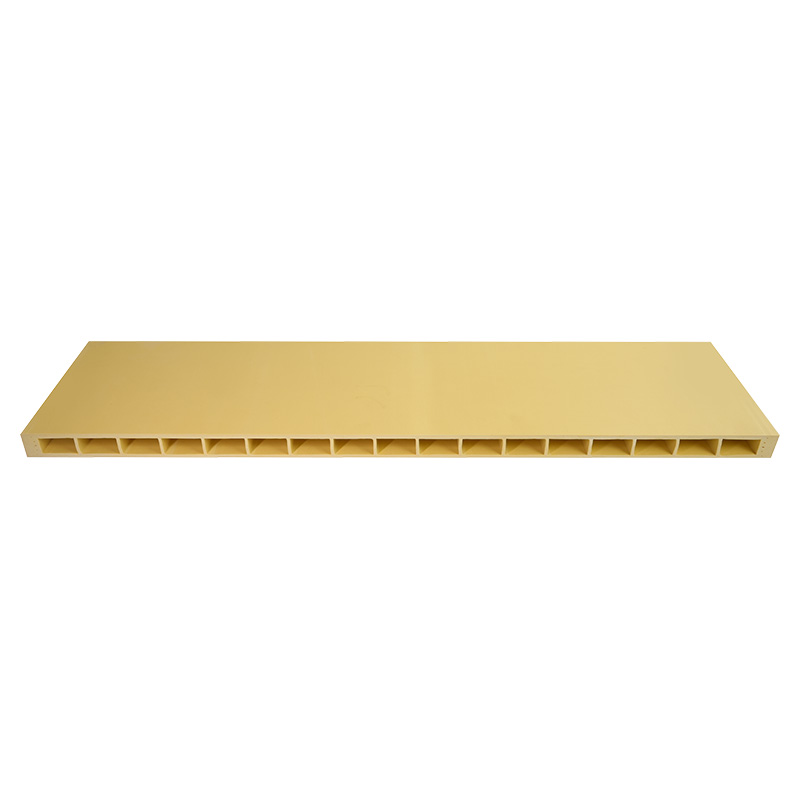
PVC foam door cores are made from polyvinyl chloride (PVC) that has been expanded into a cellular foam structure. This foam is lightweight but strong, closed-cell, and resistant to moisture, insects, and chemical corrosion. These properties make PVC foam an attractive alternative to traditional wood, MDF (medium-density fiberboard), or blockboard cores.
Key characteristics of PVC foam door cores include:
- Lightweight: Easier to handle, transport, and install.
- Water-resistant: Ideal for areas with high humidity.
- Durable: Resistant to cracking, warping, and termite damage.
- Versatile: Can be machined, veneered, laminated, or painted.
- Thermal and sound insulation: Offers moderate insulation compared to solid wood.
These attributes make PVC foam suitable for a wide range of door applications. But the suitability for hollow-core or solid-core doors depends on the door design, usage, and performance requirements.
Hollow-Core Doors: What They Are and PVC Foam Compatibility
Hollow-core doors are lightweight doors typically made by sandwiching a thin door skin around a hollow interior. This interior can be constructed using:
- Honeycomb cardboard
- Metal or plastic grids
- Lightweight wood frames
Hollow-core doors are common in residential interiors due to their low cost and ease of installation. However, traditional hollow-core doors can have limitations, such as weak structural strength, poor sound insulation, and susceptibility to moisture.
Using PVC Foam in Hollow-Core Doors:
PVC foam can serve as an excellent alternative to conventional hollow-core interiors. Here’s why:
- Structural reinforcement: PVC foam adds rigidity to the door, making it stronger than cardboard or honeycomb cores.
- Moisture resistance: Unlike wood or MDF, PVC foam will not swell or warp when exposed to humidity, reducing maintenance issues.
- Lightweight: PVC foam maintains the low weight advantage of hollow-core doors, ensuring easy handling.
- Sound insulation: Though not as effective as solid cores, PVC foam provides better acoustic performance than empty or cardboard-filled cores.
Considerations:
- PVC foam hollow-core doors are best suited for interior doors where extreme load-bearing is not required.
- Care must be taken to ensure the door skin adheres properly to the PVC core to prevent delamination.
- Fire resistance may be lower than solid-core alternatives unless additional fire-rated materials are incorporated.
Solid-Core Doors: What They Are and PVC Foam Compatibility
Solid-core doors are designed for higher durability, security, and acoustic performance. Traditionally, these doors are made from:
- Solid wood
- MDF
- Blockboard or particleboard
They are heavier than hollow-core doors and are preferred in commercial spaces, exterior doors, or areas requiring higher durability.
Using PVC Foam in Solid-Core Doors:
Contrary to some assumptions, PVC foam is not limited to hollow-core applications. It can be used in solid-core designs to achieve a balance between strength and lightweight properties:
- Weight reduction: Solid wood or MDF doors can be heavy, making installation challenging. PVC foam cores allow for solid-feeling doors without excessive weight.
- Moisture protection: Solid-core doors made with wood are prone to swelling in humid environments. PVC foam cores eliminate this problem while maintaining a sturdy structure.
- Versatility in design: PVC foam can be routed for panels, glass inserts, or decorative features without cracking.
- Sound and thermal insulation: While solid-core doors are already good at soundproofing, adding PVC foam enhances insulation against temperature variations.
Considerations:
- For heavy-duty security doors, PVC foam should be combined with reinforced skins or metal layers to meet structural requirements.
- Fire-rated solid-core doors require additional certification and fire-resistant layers, as PVC foam alone may not meet strict fire codes.
Comparing PVC Foam in Hollow-Core vs. Solid-Core Doors
| Feature | Hollow-Core with PVC Foam | Solid-Core with PVC Foam |
| Weight | Very light | Lighter than traditional solid-core |
| Strength | Moderate | Moderate to high, depending on skin |
| Moisture resistance | Excellent | Excellent |
| Sound insulation | Better than traditional hollow-core | Good, not as high as full wood or MDF |
| Cost | Economical | Moderate, cost-effective alternative to solid wood |
| Installation | Easy | Easier than traditional solid-core |
| Fire resistance | Limited | Requires additional fire-rated layers |
This table demonstrates that PVC foam is highly adaptable and can enhance both hollow-core and solid-core doors, depending on design needs.
Applications and Practical Uses
Hollow-Core Applications:
- Interior residential doors
- Closet doors
- Lightweight office partitions
Solid-Core Applications:
- Interior doors requiring durability and noise reduction
- Moisture-prone areas such as kitchens or bathrooms
- Doors with decorative paneling or glass inserts
PVC foam is especially useful in environments where moisture, lightweight handling, and ease of machining are important factors.
Installation and Finishing Tips
- Ensure strong adhesion between PVC foam cores and door skins using industrial-grade adhesives.
- For hollow-core designs, maintain a consistent foam density to prevent sagging or deformation.
- For solid-core doors, consider combining PVC foam with MDF or plywood skins for enhanced rigidity.
- Use veneers, laminates, or paint designed for PVC surfaces to maintain long-term durability and aesthetics.
- Regularly check fire rating and building code compliance if doors are used in commercial or public buildings.
Conclusion
PVC foam door cores are versatile and adaptable, making them suitable for both hollow-core and solid-core door designs. They offer advantages in weight reduction, moisture resistance, durability, and design flexibility, while still providing reasonable structural support.
- Hollow-core doors benefit from PVC foam by becoming stronger and more moisture-resistant without losing the lightweight advantage.
- Solid-core doors benefit by being lighter, easier to handle, and resistant to environmental damage, while still offering good insulation and design flexibility.
Ultimately, whether to use PVC foam depends on the specific door application, load requirements, and aesthetic preferences. With proper design and installation, PVC foam door cores provide a modern, practical, and cost-effective solution for both hollow-core and solid-core doors.


